
Trusted Biohazard Cleanup in Santa Monica, CA — 24/7 Emergency Response
Biohazard cleanup in Santa Monica, CA starts at $1,500 for small blood or spill scenes and runs $3,000–$10,000 for unattended death and crime scene remediation in residential properties. We respond to scenes throughout Santa Monica 24 hours a day, every day of the year — from Ocean Park apartments to North of Montana condos to commercial properties near the Pier.
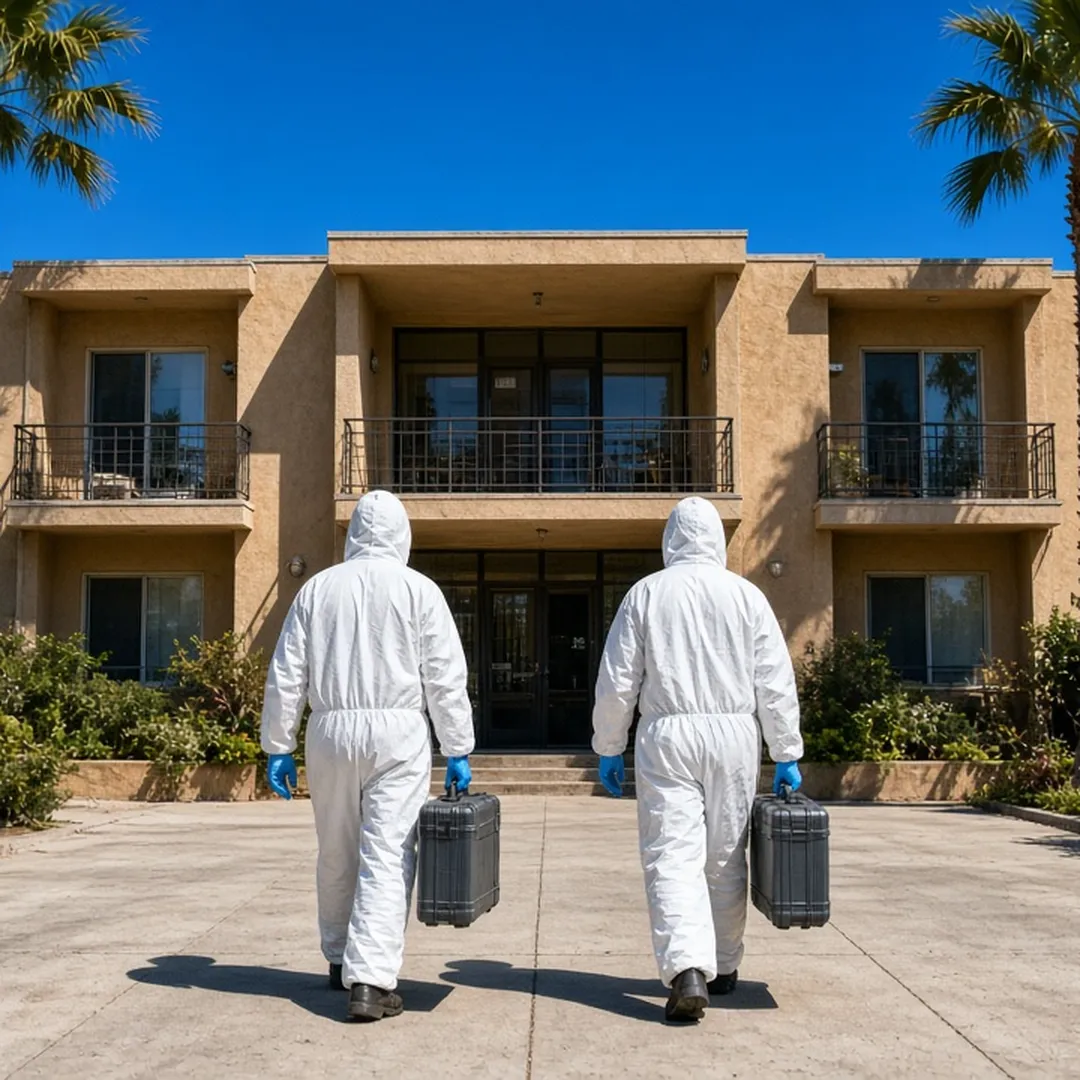
Biohazard Cleanup Services We Provide in Santa Monica
We handle every type of biological contamination scene for residential and commercial properties across Santa Monica and the surrounding areas of Los Angeles County.
Crime Scene & Homicide Cleanup
Blood, biological fluids, and tissue removal following violent crimes. We coordinate with the LA County Medical Examiner-Coroner's office and local law enforcement so work begins as soon as the scene is released.
Learn more about Crime Scene & Homicide CleanupUnattended Death Cleanup
Decomposition, odor, and fluid contamination from undiscovered deaths. The longer a scene goes unaddressed, the deeper biological material penetrates porous surfaces — we remove contamination at the source, not just the surface.
Learn more about Unattended Death CleanupSuicide Scene Cleanup
Discreet, compassionate cleanup of trauma scenes following a suicide. We handle all biological material removal, decontamination, and odor treatment so families and property managers are not exposed to hazardous conditions.
Learn more about Suicide Scene CleanupHoarding Cleanup
Biohazard-level clutter removal including animal waste, rotting materials, sharps, and structural contamination. We assess and remediate the health hazards that build up in hoarded environments.
Learn more about Hoarding CleanupBlood Cleanup
Blood and bodily fluid removal from floors, walls, furniture, and HVAC systems. Blood-borne pathogens including hepatitis B, hepatitis C, and HIV remain viable on surfaces for hours to days after contact.
Tear Gas Residue Removal
Post-incident decontamination of tear gas and chemical agents from residential and commercial interiors.
Sewage Backup Cleanup
Category 3 (black water) sewage backup remediation, including surface treatment, pathogen neutralization, and odor removal.
Learn more about Sewage Backup CleanupInfectious Disease Decontamination
Surface and air decontamination following exposure events including C. diff, COVID, MRSA, and other communicable pathogens in residential, commercial, and healthcare settings.
Work is performed by independent professionals.
How Biohazard Cleanup Works — Our Response Process
Our cleanup process follows OSHA Bloodborne Pathogen Standard 29 CFR 1910.1030 and California Department of Public Health protocols for trauma scene waste management.
First, we assess the full scope of contamination — including surfaces, porous materials, subfloor, and HVAC pathways that are not visible to the naked eye. Biological material migrates through drywall, carpeting, and flooring gaps faster than most property owners expect.
Second, we establish containment barriers around the affected area to prevent cross-contamination to adjacent spaces. In Santa Monica's older multi-unit buildings, this step is especially important for shared-wall units in Ocean Park and Sunset Park, where HVAC systems can distribute airborne particles between floors.
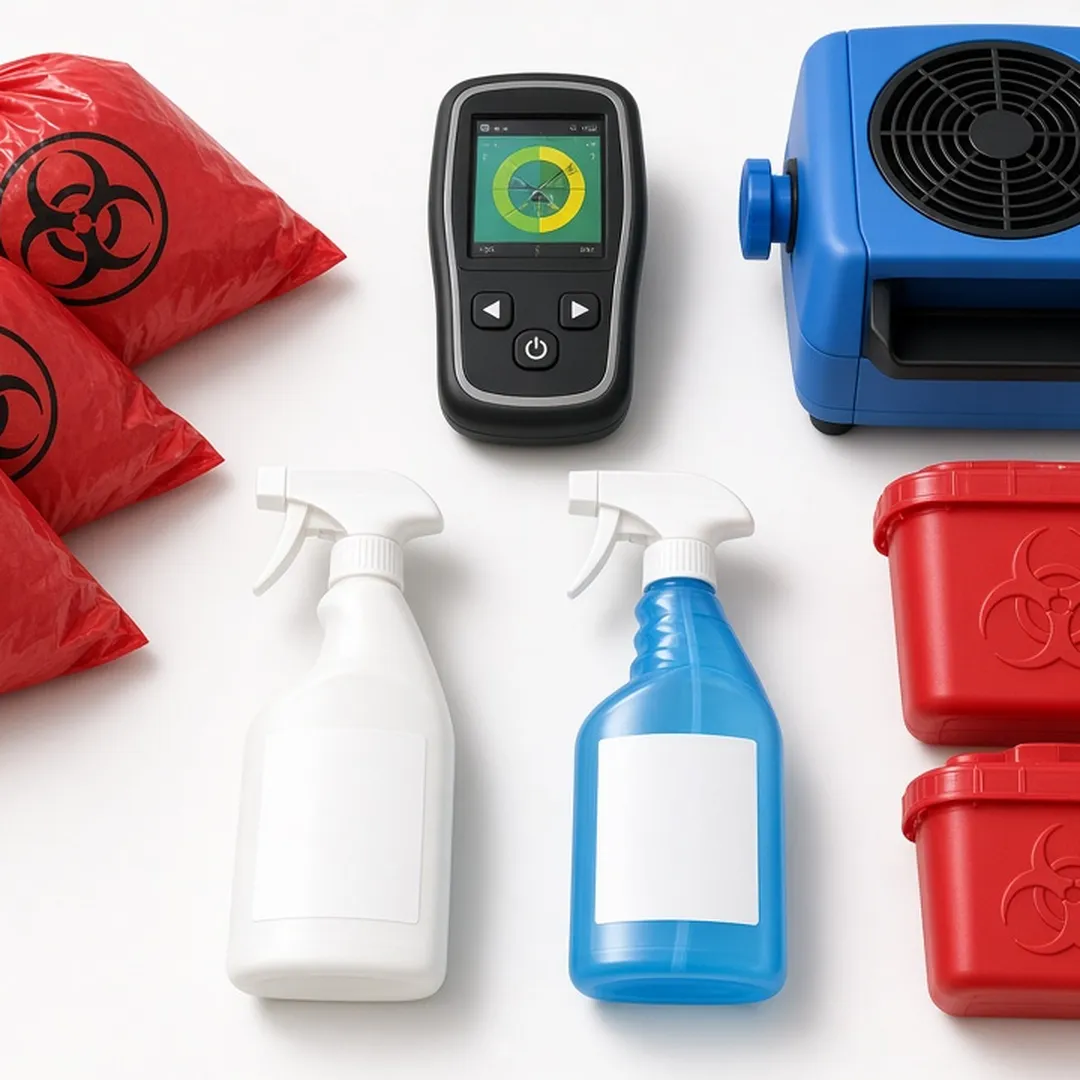
Third, we remove all contaminated materials, including non-salvageable porous items, and treat all affected surfaces with EPA-registered disinfectants rated for blood-borne pathogens.
Finally, we verify the scene with ATP testing and air quality checks, then document the completed remediation for insurance and property management records. All biohazard waste is transported and disposed of under California Department of Public Health regulations — we do not use standard waste carriers for sharps or biological material, as California law has prohibited that since September 1, 2008.
CalVCB Reimbursement for Biohazard Cleanup in Santa Monica
California's Victim Compensation Board (CalVCB) reimburses biohazard cleanup costs for qualifying crime scenes up to $1,709 per incident under California Government Code Section 13957(a)(9). This covers cleanup at a primary residence or vehicle following a qualifying violent crime — homicide, suicide, and violent assault are all covered events.
Three requirements must be met for CalVCB to pay:
The cleanup must be performed at a qualifying residence or vehicle. The filing must be submitted within 7 years of the crime. The contractor performing the cleanup must be a registered Trauma Scene Waste Management Practitioner with the California Department of Public Health (CDPH) — unregistered contractors are not eligible.
We carry CDPH Trauma Scene Waste Management Practitioner registration. When scheduling service, ask us to confirm your CalVCB eligibility so we can document the remediation in the format the board requires. Claims are filed by the victim or surviving family, not the contractor — we provide the documentation you need.
LA County victims can also contact the District Attorney's Victim Services Division at (800) 380-3811 for assistance navigating CalVCB.
Biohazard Cleanup Cost in Santa Monica — What to Expect
Biohazard cleanup cost in Santa Monica runs from $1,500 for small blood incidents to $25,000 or more for severe decomposition or large-scale hoarding with biological contamination. These are national averages — Santa Monica pricing reflects local labor rates and disposal costs, which run higher than inland California markets.
Cost ranges by scene type (national averages per Fixr and HomeGuide; local Santa Monica quotes will vary):
| Scene Type | Typical Range |
|---|---|
| Small blood cleanup | $1,500 – $3,000 |
| Suicide scene | $2,500 – $8,000 |
| Unattended death (recent) | $3,000 – $10,000 |
| Unattended death (decomposition) | $5,000 – $25,000+ |
| Crime scene / homicide | $2,500 – $7,500 |
| Hoarding with biohazards | $3,000 – $20,000+ |
Factors that affect your final cost:
Scene size and the number of rooms involved directly affect labor hours. Porous materials — carpet, drywall, subflooring — that absorb biological material require full removal and replacement rather than surface cleaning alone. Santa Monica's housing stock is 76.3% pre-1980 (ACS Table B25034, 2022) — older flooring systems and wall construction mean subfloor and wall cavity contamination is more common here than in newer construction.
Most homeowner's insurance policies cover biohazard remediation under the dwelling coverage section, depending on your policy type. If the incident qualifies for CalVCB, that $1,709 reimbursement applies toward the deductible or out-of-pocket cost after insurance.
We provide free, no-obligation estimates before any work begins.
Why Property Owners in Santa Monica Call Us
We hold CDPH Trauma Scene Waste Management Practitioner registration, which California requires for biohazard disposal and makes us eligible to document jobs for CalVCB reimbursement. We carry liability insurance and all cleanup waste is transported under California Department of Public Health-approved procedures.
Santa Monica's rental-heavy housing stock creates a specific pattern of cleanup calls: property managers and landlords — not family members — are often the first point of contact when an incident occurs in a unit. We work directly with property management companies across Santa Monica, Culver City, and West Los Angeles, and we provide the documentation packages that property managers need for insurance claims and unit turnover.
Every scene is treated as confidential. We arrive in unmarked vehicles and coordinate timing with building management to minimize visibility in common areas.
Santa Monica Biohazard Cleanup Service Area
We serve all of Santa Monica including:
- Downtown Santa Monica — Third Street Promenade area, high-density residential and commercial
- Ocean Park — South-end residential neighborhood, older multi-family stock
- Pico District — Mixed residential and commercial, many pre-1960 apartment buildings
- Mid-City Santa Monica — Central residential zone
- Sunset Park — South Santa Monica, owner-occupied and rental mix
- Wilshire/Montana — North of Wilshire, upscale residential
- North of Montana — Predominantly single-family, older estate homes
- Santa Monica Pier Area — Tourist-adjacent commercial and residential
We also serve adjacent areas including Venice, Culver City, West Los Angeles, Brentwood, Pacific Palisades, and Malibu.
Santa Monica Housing Stock and Biohazard Cleanup
Santa Monica's housing profile shapes the types of biohazard calls we receive and how we approach each scene.
Census data (ACS 5-year estimates, 2022) counts 52,277 total housing units across Santa Monica. Of those, only 27.9% are owner-occupied — meaning 72.1% of Santa Monica homes are rental units. When a biohazard incident occurs in a rental property, the landlord or property manager carries the legal responsibility for remediation, not the tenant. We work with property managers directly and provide complete documentation for insurance claims.
Santa Monica's housing stock is overwhelmingly old. The year-built breakdown (ACS Table B25034) shows that 76.3% of all housing units — 39,872 of 52,277 — were built before 1980. The largest single decade is 1970–1979, accounting for 10,491 units (20.1% of the total). The second largest is 1960–1969 at 9,590 units (18.3%). Another 6,744 units (12.9%) were built in 1939 or earlier. Only 5,103 units — less than 10% of the housing stock — were built after 2000.
Pre-1980 construction typically features original plaster-and-lath walls, hardwood subflooring with crawl spaces or raised foundations, and older HVAC systems without modern duct sealing. Biological material from a blood or decomposition event migrates through these materials faster and deeper than in modern slab-on-grade construction — and remediation in Santa Monica's older building stock routinely requires subfloor removal and wall cavity investigation that surface-only inspection misses.
7,049 Santa Monica households are single-person households where the resident is 65 years or older (ACS Table B11007, 2022). These are the households where an unattended death is most likely to go undiscovered for days or weeks. In a closed apartment in Ocean Park or the Pico District in summer, advanced decomposition can develop within 48–72 hours of death — a factor that significantly increases the scope and cost of the cleanup.
With a median home value of $1,755,500 and a household size of just 1.8 persons (Census QuickFacts, 2020–2024 ACS), most Santa Monica households are small. Property managers, not family members, are often the first point of contact when an incident occurs in a rental unit — and we work directly with property management companies across Santa Monica to handle documentation and insurance coordination.
Santa Monica's Climate and Biohazard Scene Response
Santa Monica averages 13.23 inches of annual precipitation (NOAA 1991–2020 normals, USC Santa Monica station). The dry season runs June through September, with near-zero rainfall across those four months.
The city's mean annual temperature is approximately 63°F, with summer highs averaging 75–76°F in July through September (WeatherSpark, NOAA-sourced data). Santa Monica's coastal climate moderates temperature extremes — it does not reach the 90°F+ days common inland — but warm, dry summer conditions still accelerate biological decomposition significantly compared to cooler seasons. Unattended deaths discovered in summer in closed apartments in Sunset Park or Mid-City can present advanced decomposition within 72 hours of death.
Santa Monica's low humidity, relative to inland Los Angeles County, does reduce the spread of certain airborne mold pathogens after sewage events. However, it does not eliminate the pathogen risk from blood-borne or fecal contamination — those require professional treatment regardless of ambient conditions.
NOAA's 1991–2020 Climate Normals for the Santa Monica station (USC00047888) record 13.23 inches of annual precipitation. Mean annual temperature based on NOAA monthly normals averages approximately 63°F across the year — the coastal marine layer keeps Santa Monica significantly cooler than inland LA County even in peak summer, but the temperature is still warm enough that decomposition in an unventilated apartment accelerates rapidly after 48 hours.
Frequently Asked Questions
How much does biohazard cleanup cost in Santa Monica?
Biohazard cleanup in Santa Monica typically runs $1,500–$3,000 for small blood incidents and $3,000–$10,000 for unattended death scenes, based on national cost data from Fixr and HomeGuide. Local Santa Monica quotes run higher than national averages because of Los Angeles County labor rates and licensed disposal costs. The final price depends on scene size, how deeply biological material has penetrated porous surfaces, and whether subfloor or wall cavity removal is needed. We provide a free on-site estimate before any work begins so you know the full scope and cost before authorizing cleanup.
Does California's victim compensation program cover biohazard cleanup?
Yes. California's Victim Compensation Board (CalVCB) reimburses biohazard cleanup costs at a primary residence or vehicle up to $1,709 per incident under Government Code Section 13957(a)(9). The incident must qualify as a violent crime — homicide, suicide, and violent assault all qualify. The cleanup contractor must hold CDPH Trauma Scene Waste Management Practitioner registration for the claim to be eligible. Claims are submitted by the victim or surviving family, not the contractor. The filing window is 7 years from the date of the crime.
Is biohazard cleanup covered by homeowner's insurance?
Many standard homeowner's insurance policies cover biohazard remediation under the dwelling or contents sections, depending on the cause of the incident and your specific policy. Renters' insurance policies vary widely. We document every job with photographs, scope reports, and disposal records in the format insurance carriers require for claims. Call your insurer before scheduling cleanup to understand your coverage — we can coordinate directly with an adjuster if needed.
Do I need a licensed contractor for biohazard cleanup in California?
California law requires that anyone who transports trauma scene waste — including blood, tissue, and biological fluids — must hold registration as a Trauma Scene Waste Management Practitioner with the California Department of Public Health. Unlicensed cleanup contractors cannot legally transport biohazardous waste under state regulations, and their work is not eligible for CalVCB reimbursement. When comparing services, ask any contractor you contact to confirm their CDPH registration number before signing an agreement.
How quickly can you respond to a biohazard scene in Santa Monica?
We are available 24 hours a day, every day of the year for emergency biohazard calls in Santa Monica and the surrounding areas of Los Angeles County. Response time depends on current call volume and your location within Santa Monica — contact us directly for an availability window. We do not publish guaranteed response times because actual arrival depends on real-world conditions.
Can I clean up a biohazard scene myself?
Blood and biological fluids carry pathogens including hepatitis B, hepatitis C, and HIV, which remain infectious on surfaces for hours to days. OSHA's Bloodborne Pathogen Standard requires specific PPE, contained disposal, and surface verification testing that standard household cleaning cannot achieve. Beyond the health risk, property managers and landlords in California have a legal obligation to ensure units are remediated to a habitable standard before re-occupancy — a standard that DIY cleaning does not meet. California also prohibits disposal of biological waste and used sharps through standard trash channels since September 1, 2008.
Do you serve areas outside Santa Monica?
We serve Santa Monica and the surrounding communities of Venice, Culver City, West Los Angeles, Brentwood, Pacific Palisades, Malibu, and other areas of Los Angeles County. Call to confirm service availability for a specific address.
Get a Free Biohazard Cleanup Estimate in Santa Monica
We respond to biohazard scenes across Santa Monica 24 hours a day. Call for a free estimate — we assess the scene, explain the scope of work, and give you a complete cost before any work begins.
When you call, a real person answers — not an automated reply.